
 When You're the Parent and Teacher of Multiple ChildrenA common question we get is, "how can I possibly homeschool successfully with more than one child?!!!
We at Daily Wonder fully recognize this challenge and are here to encourage you to go for it. We have collected our ideas based on teaching experience and feedback from other DW members. We hope you'll be inspired and encouraged to persevere through the inevitable learning curve. Let us remind you that not only do you need to learn to homeschool for two different grades, but most of you are new to homeschooling entirely and ought to cut yourself some slack. You heard it here; take a deep breath; you've got this! Here are the top 10 suggestions for homeschooling more than one child:
0 Comments
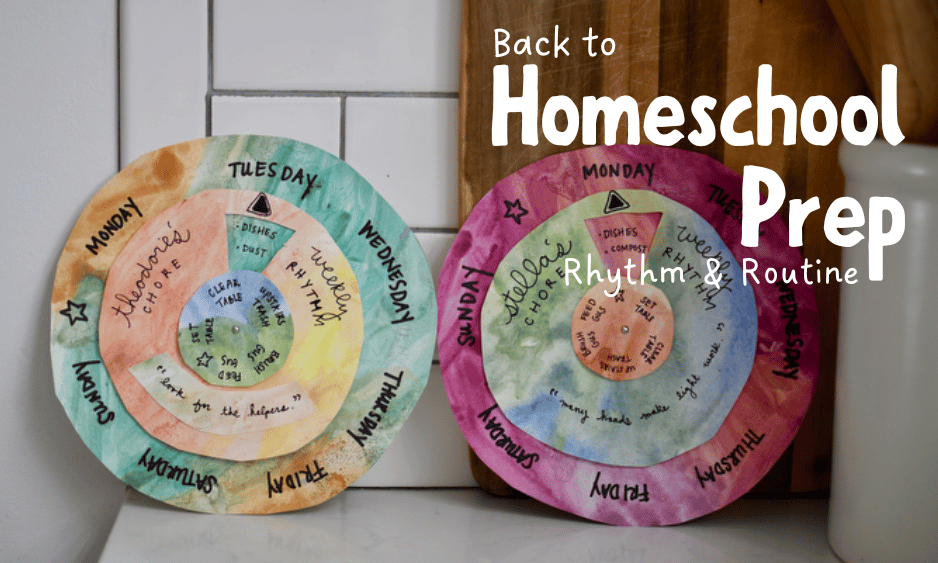 Back to School PrepDaily Wonder lesson plans provide the daily, monthly and yearly rhythm of your school year. The educational planning is done, and there is minimal preparation awaiting you, the parent. We all know how hectic the school year can get with all the things that need to happen in one day. The Wonder Squad highly recommends taking the time now to look into your prep needs. You will be so grateful down the road for taking the time now to get organized. Lazy summer days offer leisurely ways to check things off the "back to homeschool to-do list".
Here are our suggestions:
 By afternoon, the focused work of the morning is complete, and there is an opportunity for the day to open into a different kind of learning. At Daily Wonder we love meaningful work, creativity, movement, nature, storytelling, and play.
In a Waldorf-inspired homeschool, we often speak about rhythm rather than schedule. Rhythm gives children a sense of what comes next without requiring every day to unfold according to the clock. It creates a structure around family life while still leaving room for weather, energy, appointments, younger siblings, unexpected adventures, and all the other realities of learning at home. Daily Wonder provides parents with guidance for the more focused academic work of the day. The afternoon can have a different quality. It is a beautiful time to make space for handwork, painting, music, household tasks, outdoor play, seasonal activities, and telling stories. And it doesn't need to be complicated.  Creating Rhythm, Routine & RitualAt Daily Wonder, we talk a lot about rhythm, routine and ritual. That’s because we know that young children feel a sense of good health when held by boundaries, including the layout of the day, week, and month. Children learn through play and doing until they reach high school, and they need lots of activities that spark their creativity and provide space for wonder. Then, when they know what we expect of them, the children are freed up to be in the moment. After that, it is up to the adults to create boundaries to free the children.
 This is a wonderfully hands-on project for The Wonder of Geology. It can be enjoyed by children of many ages, and Grade 6 students will be especially ready to connect the artistic process with the science of how geodes form. Long-time Daily Wonder homeschoolers at The Gnome’s Treasure Chest shared this tutorial with us, and we are incredibly grateful for this gift and the chance to pass it along to all of you. A Short Lesson on GeodesA geode is a rock that may look simple, rough, and ordinary on the outside, but inside it holds a hollow space lined with crystals or colourful mineral layers. Geodes often begin when there is an empty pocket inside a rock. This hollow place may be formed by a gas bubble in cooling lava or by an opening left within sedimentary rock. Over a very long time, mineral-rich water slowly seeps into the hollow space. As the water moves in and out, tiny mineral particles are left behind on the inner walls. Layer by layer, these minerals build up and may form crystals such as quartz, calcite, or amethyst. In this wet-felted project, your child will create a wool geode that mirrors this geological process. The colourful wool at the centre represents the sparkling minerals and crystals hidden inside. The white layer can represent a pale mineral band, and the brown or grey outer layer represents the plain, rocky outside. When the finished felted ball is cut open, the surprise inside helps your child experience, in an artistic way, the wonder of discovering a real geode. Materials Needed Waldorf Meal BlessingsWaldorf meal blessings are a beautiful tradition that can help establish a sense of gratitude, mindfulness, rhythm, and ritual during meal times. In Waldorf education, meal blessings are an opportunity to foster a deep sense of thankfulness for food and community. These blessings often involve a simple verse or prayer that expresses gratitude for the food and the efforts of those who prepared it. Modelling gratitude is such a gift we can give our children, and mealtime blessings are a great way to establish the family rhythm and ritual together.
Here are three of our favourite mealtime blessings that we used at our Waldorf school. |
Tips & tools to support your homeschool program.BlogExplore schedules, rhythms & routines, songs, music, festivals, free play, meals, projects & more to support your homeschooling program.Categories
All
Archives
September 2026
|
 RSS Feed